Looking to Sell or Let?
Begin your journey with a free property valuation. Get the facts and figures to make informed decisions.
Property Valuation
"*" indicates required fields


With a housing supply shortage and financial challenges making it difficult for people to get onto the property ladder, the demand for rental properties in the UK remains high. While rental price growth has shown signs of slowing down, over the last three years, average rents in England have increased significantly.
North London remains a popular place to live, with excellent transport links into the city and more affordable rents compared to central London areas. Changes to first time buyer stamp duty thresholds has made it harder to buy property, particularly in areas where house prices are higher. For example, in Brent, the average house price over the last 12 months was £573,000 and there is now no first-time buyer stamp duty relief for houses purchased for over £500,000.
Would-be buyers also face the problem of higher mortgage interest rates compared to three or more years ago, so for many, renting property is the only option for living in locations like Neasden and West Hampstead.
The upcoming Renters’ Rights Bill will introduce stricter rules around rent increases, which should help to keep rental homes more affordable for tenants. However, recent trends show that rent increases are to be expected, so if you are wondering what the average London rent rises are, read on.
Across London rentals as a whole, average rents increased by 7.7% in the 12 months up to May 2025 (data from the Office of National Statistics). Historically, London has often seen higher inflation rates than other areas of the UK but more recently, there has been a higher average rent inflation in the north east and north west of England.
Rent inflation has varied significantly in different areas of London, with many areas seeing a slowdown in rent increases. In Brent, the average monthly rents in the year up to May 2025 was £2,031, with rents staying almost the same compared to a year earlier.
However, in Camden, where the average monthly rent was £2,822 in the year up to May 2025, there was a huge 11.4% average rent increase. In Barnet, the average monthly rent for the same period was £1,876 (a 7.5% annual increase), representing a similar increase to rent inflation across wider London.

Rent inflation in north London has differed greatly across specific areas. Some areas, such as Brent, where inflation had rocketed over the last couple of years, saw inflation drop to around 0% in the year up to May 2025. This indicates that affordability pressures had reached a point where rental growth was not feasible.
However, at the other end of inflation range, Camden rents increased by over 11%, driven by a low supply coupled with the high desirability of properties in the area. Camden is a prime location for high earners who have been less affected by the cost of living increases.
Meanwhile, areas further out from central London, such as Barnet, saw a steady rent inflation of around 7%, in line with the average rent increases experienced across London boroughs.
Currently, there is no legal restrictions on how much a landlord can increase rent by, but any rent increase should be fair and reasonable. This means any increase should be aligned to the local rental prices and tenants on fixed term tenancies must agree to the rent increase. Ultimately, you don’t want to be in a position where you feel you have to sell your investment property due to lack of profit or have to refinance.
Want to know more? If rising rents put your tenancy under strain, familiarise yourself with the process for dealing with late rent payment and your options if a tenant stops paying rent altogether.
Yes, in most cases, a landlord can increase rent every year. However, increases can only be introduced as allowed by the type of tenancy. For periodic tenancies, landlords can increase rent every year, provided that the rent increase is deemed to be fair.
For fixed-term tenancies, landlords can only increase rent during the fixed term if there is a clause in the tenancy agreement to do so. Otherwise, they would need to wait until the fixed term ends and then an increase could be applied to renew the tenancy.
If a landlord serves a section 21 notice for a no fault eviction, but the tenant remains in the property with the agreement of the landlord, it is possible to increase rent if both parties agree. Section 21 no fault evictions will be abolished when the Renters’ Rights Bill comes into effect, with all tenancies moving over to periodic – so check how to evict a tenant carefully before proceeding.
Rent increases will therefore follow the rules for these types of tenancies when the bill is introduced. The new rules will also make it easier for tenants to challenge rent increases that they believe to be unfair.
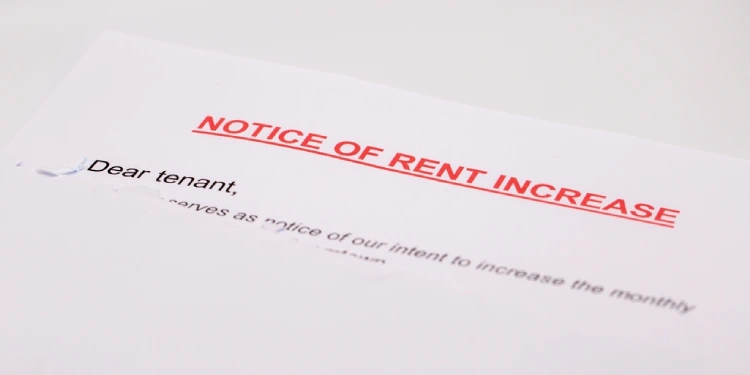
Typically, the notice period required is one month for tenancies where rent is paid weekly or monthly. However, for tenancies that are paid annually, the notice period is six months.
Landlords in England can use the government’s Form 4: Landlord’s notice proposing a new rent or they can write a letter to notify tenants of their intention to increase rent. A rent increase letter should include:
Want to find out more? Rent performance is just one element of an effective end-of-year review — our end of year checklist for north London landlords covers everything else worth assessing before the new year begins.
Rent increases are often essential for landlords to cover escalating costs associated with maintaining and managing rental properties. As long as rent increases are fair compared to the local rental market and are compliant with the regulations, rent increases can usually be agreed without any problems.
If you are a landlord with property in north London areas including Cricklewood and Dollis Hill, we can help to ensure rent increases are applied fairly while optimising your rental income, and we can manage rent increase communications with tenants to help achieve positive outcomes.
Please get in touch if you would like to find out more about our property management services, or even change your letting agent during a tenancy.
Begin your journey with a free property valuation. Get the facts and figures to make informed decisions.
"*" indicates required fields
Want to discuss something more specific? Contact us, and we will be more than happy to help you.
"*" indicates required fields


What’s the best decision – should I sell my North London rental property, or hold onto it for now? Deciding to sell your rental propert...

Do you hold a landlord licence for your Brent rental property? Our guide explains the Brent landlord licensing schemes at a glance, the c...

How well do you know your landlord compliance responsibilities? The Renters’ Rights Act changed the rules on landlord compliance from 1 M...