Looking to Sell or Let?
Begin your journey with a free property valuation. Get the facts and figures to make informed decisions.
Property Valuation
"*" indicates required fields


How to evict a tenant from your rental property – should you need to – is a key concern for landlords. If you’re a landlord with property in the north London areas of Cricklewood, Queens Park, Willesden Green, Kilburn or West Hampstead, we explain the current legal steps for evicting a tenant.
Evicting someone from their home is a big step which shouldn’t be taken lightly. Unless you have a good reason to evict, such as the tenant not paying rent (or just late rent payment), or even nuisance behaviour – think very carefully before starting eviction proceedings. The process can take some time, be costly and leave you without rental income.
You can legally evict a tenant for breaking the terms of their tenancy agreement using Section 8 of the Housing Act 1988. This may be for failing to pay rent, causing damage or for anti-social behaviour.
You can currently ask your tenant to leave under Section 21 of the act without giving a reason as long as certain conditions are met. Section 21 is also referred to as a ‘no fault’ eviction. Note that Section 21 evictions will be abolished when the Renters’ Rights Bill, which is currently going through parliament, becomes law.
You can currently serve a Section 21 notice asking your tenant to vacate the property without giving a reason. You can only do this if your tenant has a periodic tenancy, which rolls from week to week or month to month or if they are no longer in the fixed term or first four months of their tenancy. You must give your tenant two months’ notice. You should use form 6a, on the government website.
To be able to serve a Section 21 notice you must have given your tenant copies of
You can use a Section 8 notice to evict a tenant for breaking their tenancy agreement, such as by failing to pay rent, causing a nuisance or damaging the property. You can do this at any time during the tenancy, including the fixed term period.
Use a Notice seeking possession form from the government website, stating the terms of the tenancy that have been broken. How much notice you need to give ranges from two weeks to two months depending on the reason for eviction.
You should complete a certification of service form (N215) writing “served by [your name] on [the date]” on the notice. You can use this to apply for a possession order if your tenant doesn’t leave on the specified date.
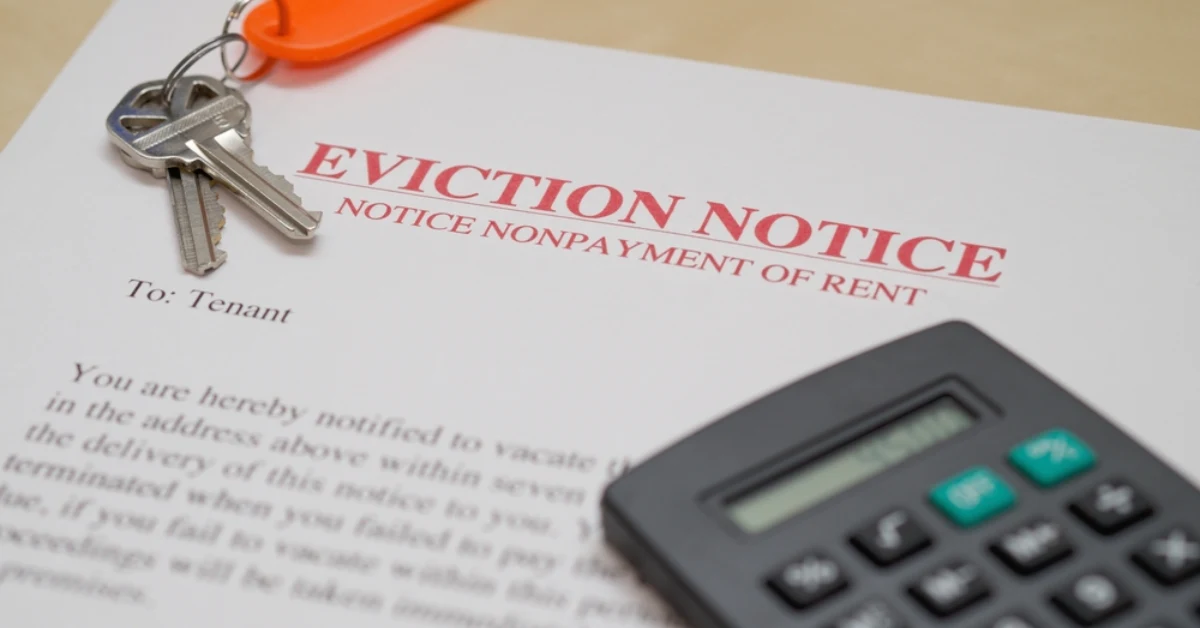
Want to know more? Before reaching the point of eviction, there are earlier steps worth considering — read our guides on late rent payment and what to do when a tenant stops paying rent to understand the process from the start.
If the tenant does not leave the property after the notice period has elapsed, you should apply for a possession order. You have two options here:
If your case goes to court the judge may make one of the orders listed below. However, the case may be dismissed if the judge rules there is no reason for your tenant to be evicted.
The order passed by the judge may be:
Want to find out more? If a tenancy breach involves illegal subletting, or you’re considering whether to sell your property with a sitting tenant rather than pursue possession, our guides cover both situations in detail.
If you receive a possession order, and the tenant does not leave the property by the due date, you can apply for a warrant for possession. You can apply using form N325 or the Possession Claim Online service. It costs £143.
The court will send your tenant an eviction notice with the date they must vacate the property. A bailiff can carry out the eviction if they do not leave by this date.
If you let property in north London, we can help you manage your rental and the issues that come with being a landlord such as how to evict a tenant. Contact us to find out more about our services for landlords.
Begin your journey with a free property valuation. Get the facts and figures to make informed decisions.
"*" indicates required fields
Want to discuss something more specific? Contact us, and we will be more than happy to help you.
"*" indicates required fields


Late rent payments can seriously add to the stress of being a landlord, but a calm and professional response can help to resolve the situ...

As we move into June, the lettings market across North West London enters a different phase. Summer is not just ...

After the Government changed vacant property council tax charges in April 2025, one of the most common questions Portland is asked is do ...