Looking to Sell or Let?
Begin your journey with a free property valuation. Get the facts and figures to make informed decisions.
Property Valuation
"*" indicates required fields


How well do you know the streets of West Hampstead, and the subtle differences in conservation area designation, architectural quality, and school catchment position?
With West Hampstead taking up a relatively small footprint within the London Borough of Camden, the differences between one road and the next can be sharper than they first appear – and this matters if you’re looking to buy, rent or invest in the area.
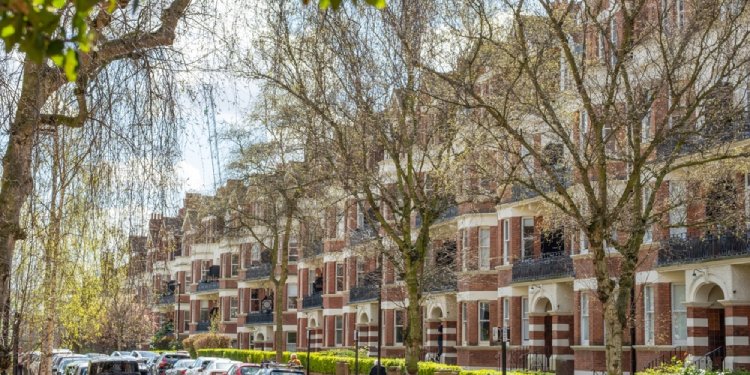
Spreading out from West End Lane, West Hampstead is mostly covered by NW6 but the eastern edges fall within the particularly sought-after NW3 postcode. Knowing how the dynamic works could help you decide if you’re getting good value for money. The average sold price over the last year was £853,679 as per Rightmove, with flats averaging £709,190 and terraced houses £1,375,231.
Just a glance at the numbers tells you how much property type can also make an impact on selling price – and the range of prices you’re likely to encounter. This guide works through the area street by street and pocket by pocket, so you can match your priorities to the right part of West Hampstead before you start viewing.
West Hampstead’s most sought-after streets include the wide, tree-lined roads of substantial Victorian and Edwardian houses that attract families and long-term owner-occupiers. They also take in the quieter residential streets close to the Jubilee line station that appeal to professionals prioritising transport above all else. For example, Solent Road and the streets immediately by West Hampstead tube station attract persistent demand from professionals who view Jubilee line access as the primary consideration.
The roads running west off West End Lane, towards the Overground and Thameslink stations, include some of the area’s most consistently high-value addresses. Crediton Hill is one of the more established premium roads in the NW3 corner of West Hampstead, with large semi-detached and detached houses that rarely reach the open market. Its position close to Hampstead itself lets it benefit from NW3’s particular prestige.
Compayne Gardens is also widely regarded as one of the most desirable addresses in the area. Leading north to south, it showcases particularly well-preserved late-Victorian housing accentuated by mature planting. The garden square at its centre adds another strong draw for families and buyers seeking out the best of West Hampstead. Canfield Gardens and Priory Road also consistently achieve strong prices, with Priory Road’s larger houses making it one of the more expensive streets in the NW6 4 postcode. These roads benefit from quietude, despite being close to the Finchley Road and the handy transport options the location brings.
Terraced houses in West Hampstead averaged £1,375,231 over the last year according to Rightmove figures, but the spread around that figure is fairly wide. Streets within conservation area boundaries and those with the longest, most intact runs of original architecture tend to sit above the average. By contrast, the roads where Victorian homes have been heavily altered or converted tend to sit below it.
Different buyers tend to gravitate to certain pockets of West Hampstead. The table below sets out the main zones, their overall character, and who it generally suits.
| Zone | Character | Who it suits | Price indicator |
|---|---|---|---|
| NW3 (Crediton Hill, Compayne Gardens) | Large Victorian/Edwardian houses, close to South Hampstead border | Families, long-term owner-occupiers | Top of the West Hampstead range |
| Central NW6 (West End Lane and side streets) | Mixed terraces, mansion blocks, independent shops nearby | Professionals, first-time buyers, investors | Mid-range; varies sharply by street |
| Station area | Flats and conversions, high footfall, strong transport | Commuters, young professionals, buy-to-let | Moderate for flats; competitive |
| Fortune Green Road area | Quieter residential, close to Fortune Green open space | Families wanting more space and quiet | Mid to upper-mid |
| Finchley Road area | More urban, commercial ground floors, busier roads | Buyers prioritising transport over quiet | Lower end of the range |
Affects the architectural preservation in an area, and therefore, how much a buyer can alter a property. The West End Green Conservation Area covers a substantial portion of the residential streets west of West End Lane, closely guarding the Victorian and Edwardian character. South Hampstead Conservation Area begins just south of the station, while Redington Frognal Conservation Area takes in many of the streets on the farther side of the Finchley Road. Camden Council’s planning portal sets out the boundaries and the associated Article 4 directions, as well as conservation area boundaries across the borough.
Catchments influence demand in certain streets, and the most sought-after primary schools serving West Hampstead rely on distances from school to home that shift from year to year. As a result, buyers should check Camden Council’s school admissions information directly for the current year rather than relying on older guidance as entry can be competitive.
Transport divides the area in a way that directly affects value. West Hampstead has three stations within a short walk of each other: the Jubilee line Underground station (Zone 2), the London Overground station, and the Thameslink station. The Underground station is one of the busier Zone 2 stations in North London, with 8.1 million entries and exits last year by TfL data, and streets within a five-minute walk can attract a premium. Even commuters travelling outside the Jubilee line route can easily connect to other lines.
Is the area’s main open space, a short walk from the western residential streets. Roads backing onto or immediately adjacent to the green, including parts of Fortune Green Road itself, attract buyers who want park access without paying the Hampstead Heath premium.
Want to know more? Explore the types of property in West Hampstead and see what living in West Hampstead is really like.
Price variation in West Hampstead is driven by a combination of property type, architectural integrity and conservation area status, as well as the distance to transport and parks.
| Zone or street type | Property type | Approximate price range |
|---|---|---|
| NW3 area (Crediton Hill, Compayne Gardens area) | Large semi-detached/detached houses | £1.5m–£2.5m+ |
| Priory Road / Canfield Gardens area | Terraced and semi-detached houses | £1.2m–£1.8m |
| Central NW6 terraced streets | Victorian terraced houses | £900k–£1.4m |
| Station area | Flats (purpose-built and converted) | £500k–£800k |
| Finchley Road area | Flats and conversions | £450k–£700k |
| New-build developments | Flats | From £630,000 |
Two points are worth noting as a buyer. First of all, the NW6 3 postcode sector saw prices fall 4.7% in the last year, or 7.6% after inflation (as of June 2026). A second consideration is that properties can be slower to sell in 2026. As a result, you may find there’s more room to negotiate, particularly on streets where supply is higher, or if the property has been on the market for some time.
A key question on any street in West Hampstead, however, is whether the property retains its original features and period character. On like Compayne Gardens, buyers often pay a premium that reflects both the aesthetics and the relative scarcity of such well-preserved properties.
On streets where more heavy conversion or extension has taken place, prices are usually more moderate even if the address itself is a desirable one.
The streets overlooked by buyers who are new to West Hampstead are often those that fall between West End Lane and the stations.
For instance, Lymington Road and Agamemnon Road, which run roughly parallel to the main residential streets but are set slightly back from West End Lane. Both offer Victorian terraced houses at prices that have historically sat below the area average, in a fairly quiet setting.
Sumatra Road is another street worth attention, as it winds its way from the stations to Mill Lane. Here, buyers can find well-presented period properties in good condition, yet with prices that are relatively low for the area. The western end of Broadhurst Gardens sits in a quieter position than its name might suggest to buyers who associate the road primarily with its busier eastern end. Once again, properties often sell at a discount to equivalent stock on better-known roads nearby.
Streets near West Hampstead’s stations and in the Finchley Road area tend to be popular with renters, matching the area’s young professional demographic and its exceptional transport links. The streets within a short walk of the Jubilee line, Overground, and Thameslink stations, have a particularly high concentration of rental properties. But converted Victorian houses and purpose-built flats can also work well for the area’s many residents in the 20-39 age group.
The family streets to the west, such as Compayne Gardens, Canfield Gardens, Fortune Green Road, and the roads around Fortune Green itself, tend to draw in owner-occupiers. These are streets where buyers tend to stay for longer periods, and where the rental market is thinner and more selective.
| Zone or street type | Predominant tenure | Typical buyer or tenant profile |
|---|---|---|
| Station area | Mixed, high rental proportion | Young professionals, commuters, buy-to-let investors |
| Finchley Road corridor | Rental-heavy | Short to medium-term renters, international residents |
| Compayne Gardens / Canfield Gardens area | Owner-occupier dominant | Families, long-term buyers |
| Fortune Green Road and western streets | Mostly owner-occupier | Families, professionals with children |
| New-build developments | Mixed, some build-to-rent | Young professionals, investors |
For buy-to-let buyers, the station-adjacent streets offer the most consistent rental demand, underpinned by the area’s position as one of the few parts of Zone 2 North London with three separate rail connections.
The most significant development coming to West Hampstead is the redevelopment of the O2 Centre site on Finchley Road, approved by Landsec in 2023. This is large mixed-use scheme is expected to bring new homes, retail, and public spaces that could have a bearing on streets in the immediate area. The development will change the character of that area over the medium term, likely adding footfall but also increasing density – something to keep an eye on if buying property nearby.
The O2 Centre approval also secured a £10 million contribution towards step-free access at West Hampstead Underground station, which currently lacks it. The Overground and Thameslink stations were upgraded in 2011 and 2019 respectively and already have step-free access. A proposal in 2025 to replace light industrial units adjacent to the Underground station with student accommodation and new homes would, if approved, allow TfL to expand the station and provide step-free access alongside a widened pavement at the entrance.
Streets closest to the Underground station stand to benefit from this improvement in accessibility, which would increase the station’s catchment and likely support demand in the immediately surrounding streets.
With a clearer impression of the homes offered by West Hampstead’s streets, you can start to move your property search forwards. Speaking to a local agent is an excellent way to find out what’s available to sell or let today, and which homes could best fit your requirements. Contact us to talk through your priorities, or register as a buyer or tenant to be matched with properties as they come to market.
Compayne Gardens, Canfield Gardens, and Priory Road are often considered among the most sought-after addresses, prized for their well-preserved Victorian and Edwardian houses and quiet settings. Buyers for whom close transport links are an absolute must-have, often seek out the streets close to the Jubilee line station such as Solent Road. Their proximity to the station helps to support persistent rental demand.
The main price drivers are conservation area designation, the quality and completeness of original period features, proximity to Fortune Green or the Jubilee line station, and school catchment position. Two streets fifty metres apart can differ significantly on all of these factors.
Rental demand from young professionals can be strong around the three rail stations, which sit in Zone 2. Prices remain below the 2023 peak, creating a more accessible entry point than the market was offering just two years ago.
The approved Landsec scheme will change the Finchley Road area in the medium term, adding new homes and wider improvements. The development also secured £10 million towards step-free access at West Hampstead Underground station, which is expected to support demand in the surrounding streets.
Yes, the edge of NW3 around Compayne Gardens typically carries a premium owing to its proximity to Hampstead, while prices in NW6 can be comparably lower. As in any area, exact prices can vary between streets inside the NW6 postcode.
Begin your journey with a free property valuation. Get the facts and figures to make informed decisions.
"*" indicates required fields
Want to discuss something more specific? Contact us, and we will be more than happy to help you.
"*" indicates required fields

West Hampstead looks straightforward on a map - a few tube stops from central London, a walkable high street, solid Victorian bones. But ...
West Hampstead: Three Tube Lines, One Neighbourhood What if you could access the Jubilee line, London Overground, and Thameslink all wit...
Is Willesden Green London's Best-Value Jubilee Line Address? Eight minutes from Bond Street yet priced well below its neighbours, Willes...